

Climate Resilience and Poverty Reduction
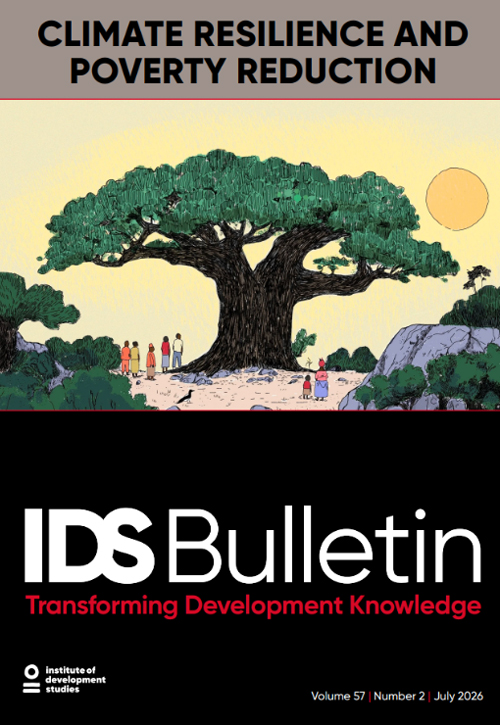
East and Southern Africa face a disproportionately high burden from climate change, which is posing a growing threat to poverty reduction in these regions. Given the dependence of poor and vulnerable rural populations on agricultural livelihoods, support programmes and policies urgently need to address weather shocks. However, the level of welfare or wellbeing at which these climate shocks can be resisted is often underestimated.
The research topics identified in this issue of the IDS Bulletin raise important questions for policy making and programme design: which policies, programmes, and investments will most effectively reduce the climate resilience threshold?
The articles in this IDS Bulletin highlight the mechanisms through which climate change drives negative poverty dynamics. They examine the role of adaptation and instruments in mitigating these negative impacts and identify policy pathways for building long‑term resilience to both poverty and climate change. The articles here provide entry points into what action might look like, for individuals, households, communities, nations, and international systems.
The evidence presented in this issue integrates consideration of different types of instruments, such as social protection, vocational training, and livelihood systems support, and considers the extent to which these are fit-for-purpose, and politically feasible, in order to address structural issues. There is also a clear argument that current climate finance is often not poverty focused, requiring a shift towards gender-sensitive, poverty-targeted, locally led programmes.
By consolidating this evidence, this issue of the IDS Bulletin aims to inform national and international policymakers, practitioners, and researchers seeking to design effective, context‑specific strategies that safeguard livelihoods in an era of increasing climate uncertainty.